Redfish on the Flats: Spring Sight Casting Tactics

Best tides, locations, and presentations for Texas coastal redfish
Why Spring Is the Best Time to Sight Cast Reds

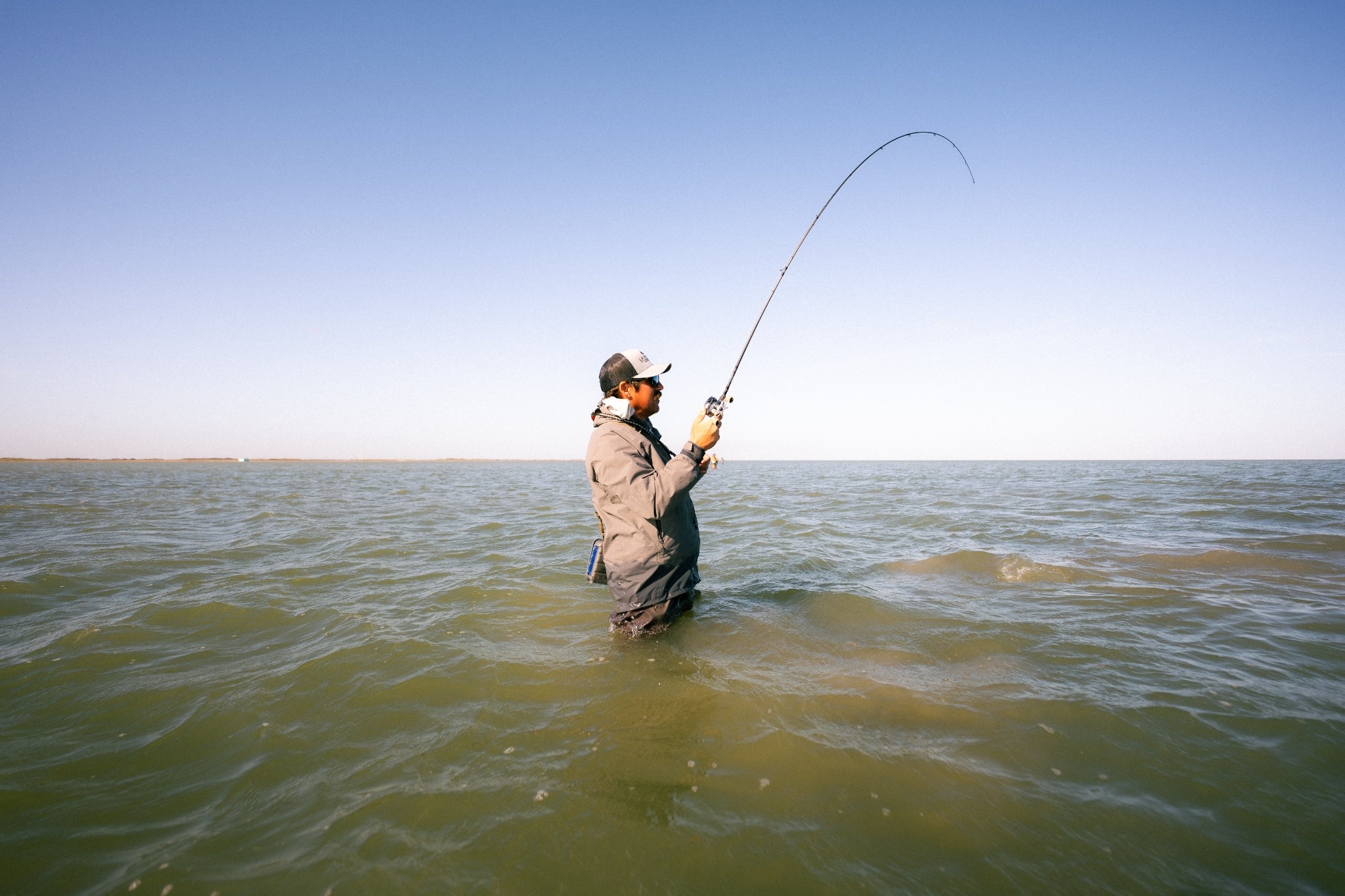
Ask any wade fisherman who works the Texas coast what their favorite time of year is, and most will say spring without hesitating. Water temps climb from the mid-50s into the low 70s between March and May, pushing redfish out of their winter staging areas and onto the shallow grass flats where they feed aggressively and, most importantly, are visible.

Sight casting to tailing or cruising redfish is as technical as saltwater fishing gets in Texas. You're reading water, reading fish body language, making a precise presentation under wind pressure, and doing it all before the fish moves out of range. When it works, it's one of the most satisfying experiences inshore fishing has to offer. When it doesn't, it's an education in patience and humility.

The conditions that make spring ideal are water clarity and temperature. Seagrass is active but not yet overgrown, winds are typically lighter than fall, and the bays recover from winter turbidity faster in sheltered areas. By late April in Aransas Bay, Baffin Bay, and the Lower Laguna Madre, you can find windows of excellent visibility on a calm morning that let you spot fish at 40 feet or more.
Reading the Flat

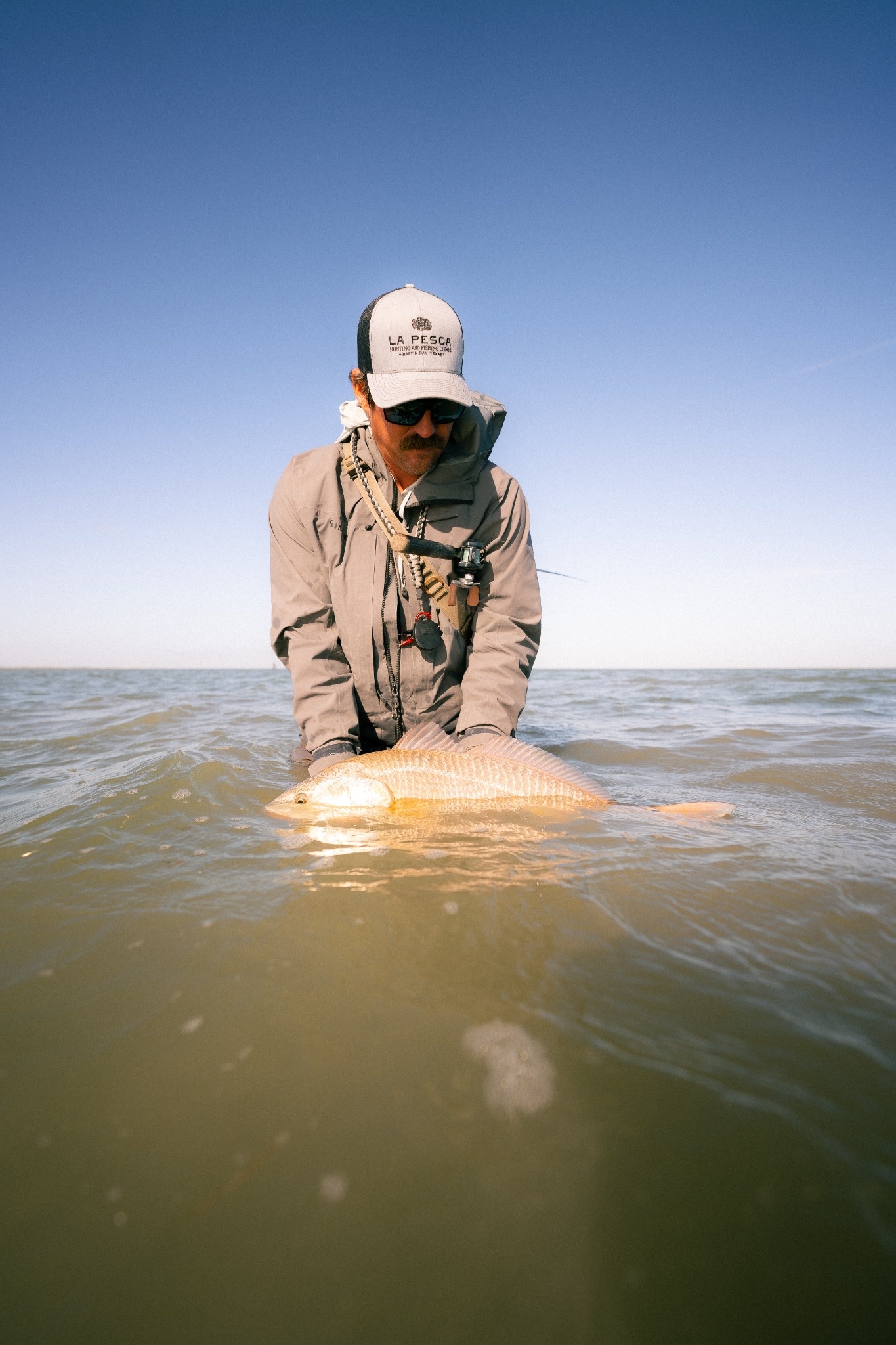
Productive spring flats share common characteristics: knee- to thigh-deep water, hard sand or firm grass bottom, and proximity to deeper staging areas where fish can retreat when conditions change. Soft mud bottoms hold redfish occasionally but are harder to wade and typically less productive than firm sand or mixed shell-grass areas.

Look for fish in three distinct situations. Tailing reds are feeding head-down, with tails breaking the surface—this is the most exciting scenario and indicates fish actively rooting for crabs and shrimp in shallow water. Cruising fish are moving through the flat in loose schools or as singles, usually visible as dark shapes or wake disturbances in calm conditions. Laid-up fish are stationary in slightly deeper pockets, often near grass edges or shell patches, sunning themselves in the warmth of late morning.

Each situation requires a different approach. Tailing fish are focused and catchable if your cast is accurate. Cruising fish require you to lead them correctly—cast well ahead of the direction of travel and let the presentation land and settle before they arrive. Laid-up fish are the trickiest; they can be spooked by sound before you ever see them, and a presentation that lands on top of a resting red typically ends the encounter immediately.

Gear and Presentations That Work

The standard Texas sight-casting setup is a 7- to 7'6" medium or medium-heavy spinning rod with a quality reel spooled with 15-20 lb braided line and a 20-25 lb fluorocarbon leader of 18-24 inches. The combo needs to cast accurately at short range—most shots at visible reds are inside 40 feet—without splashing or ticking on the pickup.

Gold spoons remain one of the most effective lures for sight casting redfish. A 1/4 oz Johnson Silver Minnow or similar weedless gold spoon cast past the fish and retrieved slowly past its nose produces strikes from fish in nearly all feeding moods. Soft plastic paddle tails on 1/4 oz jig heads work well in deeper water and when fish are moving fast—the slower fall and more subtle action can outperform spoons on neutral or pressured fish.

For fly anglers, Clouser Minnows in chartreuse-and-white or tan-and-white on size 2 hooks match the prevalent shrimp and mullet forage. Present on an 8-weight or 9-weight with a floating line in water under 18 inches. Lead the fish by 3-5 feet, let the fly sink to the bottom, and move it with short 6-inch strips when the fish is within 6 feet of the presentation.

Wind, Tides, and Timing

Spring winds on the Texas coast are variable and often stronger than forecast. Even a light 10 mph wind significantly degrades visibility and makes accurate presentations harder. Plan around the calm windows—first light to midmorning in spring typically offers the best combination of low wind, rising temperatures, and active feeding. By midday, wind usually builds and fish move off into less visible water.

Tides matter more in some areas than others. In Laguna Madre and lower Baffin Bay, tidal influence is minimal compared to the Upper Coast. In Aransas, Corpus Christi, and Redfish bays, moving water activates fish on the flats—a rising tide in the morning that pushes water over a flat with firm bottom and grass edges is a premium spring scenario.

Moon phases influence spring redfish behavior, with full and new moons producing stronger tidal movement and typically better flat activity. Track these in conjunction with wind forecasts, and build your best trips around the overlapping windows.

Finding New Water

Productive redfish flats aren't always obvious from a boat. The best sight casting areas are often shallow enough that only waders can access them effectively, and they don't show up as hotspots on fishing reports because the people fishing them aren't advertising. Local knowledge matters here.

Finding productive flats often comes down to understanding how fish move through larger bay systems and learning to recognize the subtle signs that separate empty water from active feeding zones. Tidal movement, bait concentrations, water clarity, wind direction, and bottom composition all influence where redfish will stage throughout the day. Anglers willing to spend time scouting back lakes, marsh drains, grass flats, and shallow shorelines can consistently uncover overlooked water that holds fish without relying on crowded community spots or daily reports.

Spring doesn't last long on the coast. The window from late March through mid-May offers conditions that won't return until next year. Get out early, wade slow, and take the time to read the water before you cast. The fish are there—you just have to see them first.

Book a fishing trip with BirdDog today!

Read More...

Fishing & Adventure
South Texas Oyster Reef Restoration: Why It Matters for Anglers

Texas oyster reef restoration is rebuilding coastal ecosystems and improving fishing. Learn why reef health matters for redfish, trout, and the future of South Texas bays.

Read More
Landowner Resources
Private Land Predator Control: Protecting Fawns and Nesting Birds

Effective predator control on Texas private land protects fawn recruitment and nesting bird populations. Learn which methods work and when to deploy them.

Read More
Landowner Resources
Structuring Hunting Lease Agreements for Long-Term Success

A strong hunting lease agreement protects landowners and hunters alike. Learn the key clauses, terms, and structures that create long-term lease success in Texas.

Read More

Redfish on the Flats: Spring Sight Casting Tactics

Best tides, locations, and presentations for Texas coastal redfish

Why Spring Is the Best Time to Sight Cast Reds

Ask any wade fisherman who works the Texas coast what their favorite time of year is, and most will say spring without hesitating. Water temps climb from the mid-50s into the low 70s between March and May, pushing redfish out of their winter staging areas and onto the shallow grass flats where they feed aggressively and, most importantly, are visible.

Sight casting to tailing or cruising redfish is as technical as saltwater fishing gets in Texas. You're reading water, reading fish body language, making a precise presentation under wind pressure, and doing it all before the fish moves out of range. When it works, it's one of the most satisfying experiences inshore fishing has to offer. When it doesn't, it's an education in patience and humility.

The conditions that make spring ideal are water clarity and temperature. Seagrass is active but not yet overgrown, winds are typically lighter than fall, and the bays recover from winter turbidity faster in sheltered areas. By late April in Aransas Bay, Baffin Bay, and the Lower Laguna Madre, you can find windows of excellent visibility on a calm morning that let you spot fish at 40 feet or more.

Reading the Flat

Productive spring flats share common characteristics: knee- to thigh-deep water, hard sand or firm grass bottom, and proximity to deeper staging areas where fish can retreat when conditions change. Soft mud bottoms hold redfish occasionally but are harder to wade and typically less productive than firm sand or mixed shell-grass areas.

Look for fish in three distinct situations. Tailing reds are feeding head-down, with tails breaking the surface—this is the most exciting scenario and indicates fish actively rooting for crabs and shrimp in shallow water. Cruising fish are moving through the flat in loose schools or as singles, usually visible as dark shapes or wake disturbances in calm conditions. Laid-up fish are stationary in slightly deeper pockets, often near grass edges or shell patches, sunning themselves in the warmth of late morning.

Each situation requires a different approach. Tailing fish are focused and catchable if your cast is accurate. Cruising fish require you to lead them correctly—cast well ahead of the direction of travel and let the presentation land and settle before they arrive. Laid-up fish are the trickiest; they can be spooked by sound before you ever see them, and a presentation that lands on top of a resting red typically ends the encounter immediately.

Gear and Presentations That Work

The standard Texas sight-casting setup is a 7- to 7'6" medium or medium-heavy spinning rod with a quality reel spooled with 15-20 lb braided line and a 20-25 lb fluorocarbon leader of 18-24 inches. The combo needs to cast accurately at short range—most shots at visible reds are inside 40 feet—without splashing or ticking on the pickup.

Gold spoons remain one of the most effective lures for sight casting redfish. A 1/4 oz Johnson Silver Minnow or similar weedless gold spoon cast past the fish and retrieved slowly past its nose produces strikes from fish in nearly all feeding moods. Soft plastic paddle tails on 1/4 oz jig heads work well in deeper water and when fish are moving fast—the slower fall and more subtle action can outperform spoons on neutral or pressured fish.

For fly anglers, Clouser Minnows in chartreuse-and-white or tan-and-white on size 2 hooks match the prevalent shrimp and mullet forage. Present on an 8-weight or 9-weight with a floating line in water under 18 inches. Lead the fish by 3-5 feet, let the fly sink to the bottom, and move it with short 6-inch strips when the fish is within 6 feet of the presentation.

Wind, Tides, and Timing

Spring winds on the Texas coast are variable and often stronger than forecast. Even a light 10 mph wind significantly degrades visibility and makes accurate presentations harder. Plan around the calm windows—first light to midmorning in spring typically offers the best combination of low wind, rising temperatures, and active feeding. By midday, wind usually builds and fish move off into less visible water.

Tides matter more in some areas than others. In Laguna Madre and lower Baffin Bay, tidal influence is minimal compared to the Upper Coast. In Aransas, Corpus Christi, and Redfish bays, moving water activates fish on the flats—a rising tide in the morning that pushes water over a flat with firm bottom and grass edges is a premium spring scenario.

Moon phases influence spring redfish behavior, with full and new moons producing stronger tidal movement and typically better flat activity. Track these in conjunction with wind forecasts, and build your best trips around the overlapping windows.

Finding New Water

Productive redfish flats aren't always obvious from a boat. The best sight casting areas are often shallow enough that only waders can access them effectively, and they don't show up as hotspots on fishing reports because the people fishing them aren't advertising. Local knowledge matters here.

Finding productive flats often comes down to understanding how fish move through larger bay systems and learning to recognize the subtle signs that separate empty water from active feeding zones. Tidal movement, bait concentrations, water clarity, wind direction, and bottom composition all influence where redfish will stage throughout the day. Anglers willing to spend time scouting back lakes, marsh drains, grass flats, and shallow shorelines can consistently uncover overlooked water that holds fish without relying on crowded community spots or daily reports.

Spring doesn't last long on the coast. The window from late March through mid-May offers conditions that won't return until next year. Get out early, wade slow, and take the time to read the water before you cast. The fish are there—you just have to see them first.

Book a fishing trip with BirdDog today!

Read More...

Fishing & Adventure
South Texas Oyster Reef Restoration: Why It Matters for Anglers

Texas oyster reef restoration is rebuilding coastal ecosystems and improving fishing. Learn why reef health matters for redfish, trout, and the future of South Texas bays.

Read More
Landowner Resources
Private Land Predator Control: Protecting Fawns and Nesting Birds

Effective predator control on Texas private land protects fawn recruitment and nesting bird populations. Learn which methods work and when to deploy them.

Read More
Landowner Resources
Structuring Hunting Lease Agreements for Long-Term Success

A strong hunting lease agreement protects landowners and hunters alike. Learn the key clauses, terms, and structures that create long-term lease success in Texas.

Read More