
Spring Turkey Hunting in Texas
Tips, Tactics, and Private Land Access with BirdDog
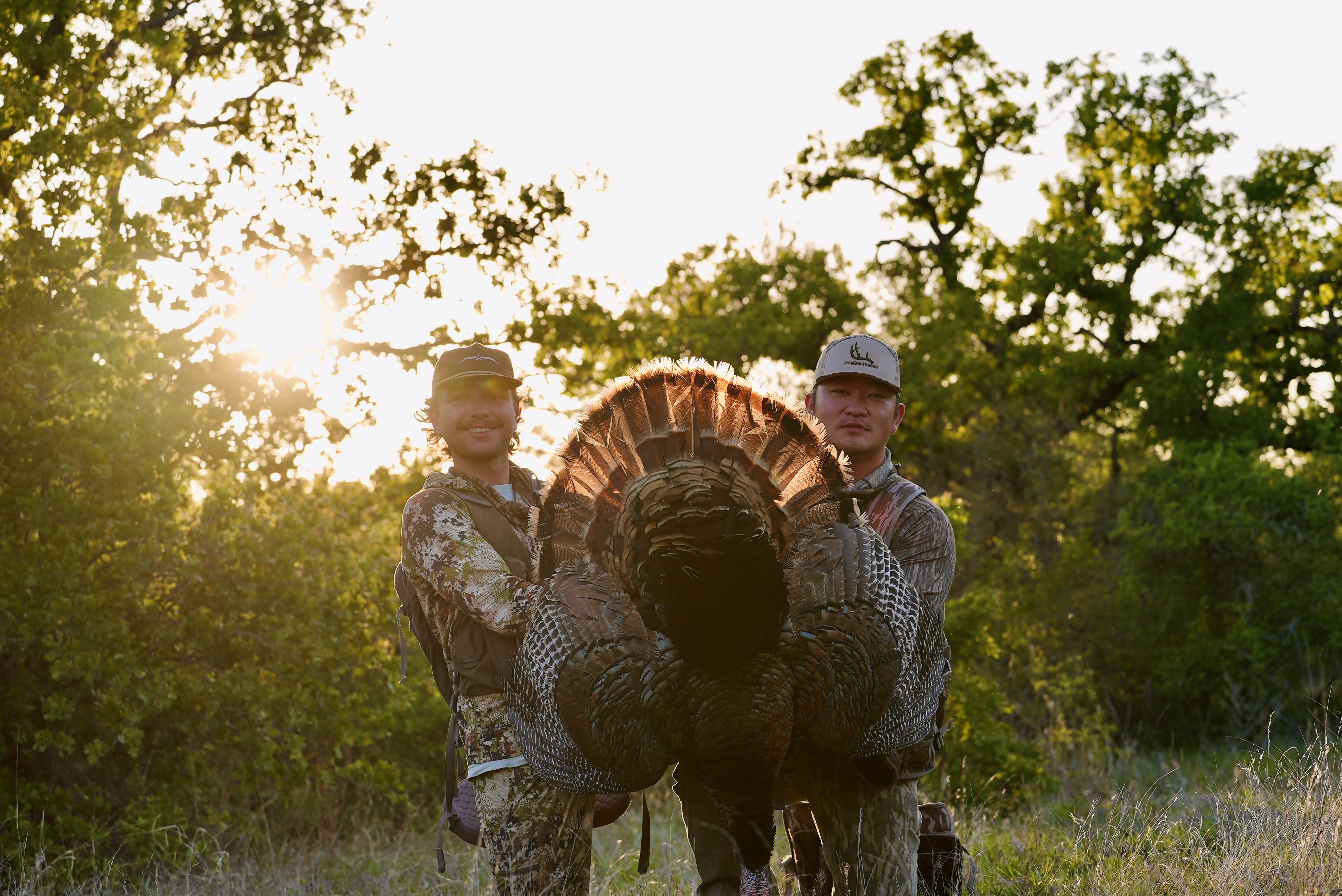
Spring Turkey Hunting in Texas: Tips, Tactics, and Private Land Access with BirdDog
Spring in Texas means one thing for a lot of us — turkey season. The woods are warming up, the gobblers are fired up, and if you've done your homework, there's nothing quite like pulling a longbeard out of the Texas Hill Country or the rolling brush country of South Texas.
Whether you're a seasoned turkey hunter or finally ready to chase your first gobbler, this guide covers what you need to know to make the most of spring turkey season in Texas — plus how BirdDog can connect you to private land where the birds are actually there.
When Is Spring Turkey Season in Texas?
Spring turkey season in Texas typically runs from late March through mid-May, with Rio Grande turkey available statewide and Eastern turkey limited to specific East Texas counties.
Texas has two main subspecies of wild turkey: the Rio Grande turkey and the Eastern turkey. Rio Grandes are the most common and are found across the central and western portions of the state. Easterns are found in a narrower band of East Texas.
Spring Rio Grande turkey season typically runs from late March through mid-May, though exact dates vary by zone. Eastern turkey season opens slightly earlier in some counties. Always verify current season dates and regulations with Texas Parks and Wildlife Department (TPWD) before you head out.
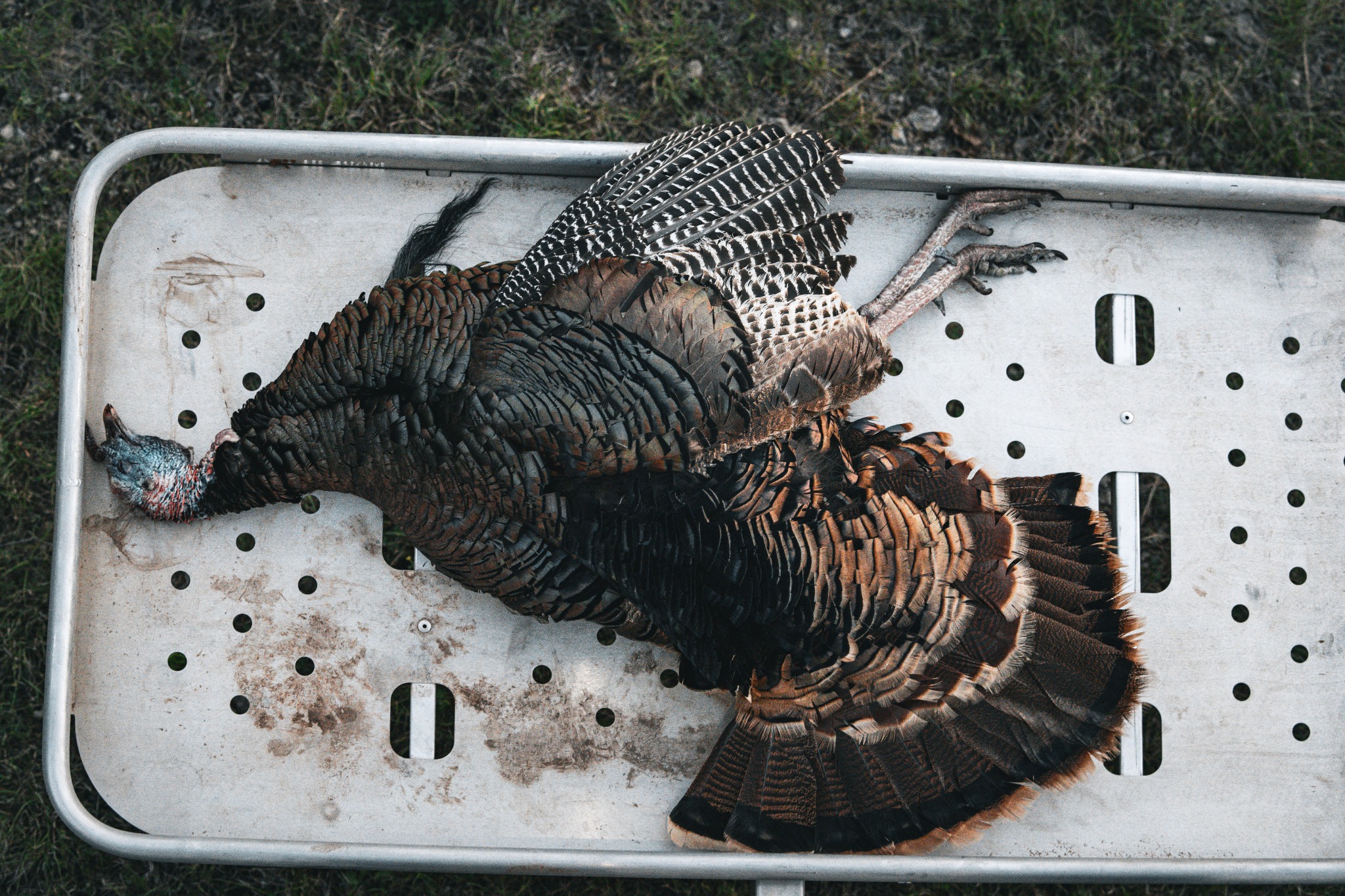
Why Does Where to Find Rio Grande Turkeys in Texas Matter?
Rio Grande turkeys in Texas are most concentrated in the Hill Country, South Texas brush country, and the Rolling Plains — private ranch land in these regions holds the highest bird densities with the least hunting pressure.
Rio Grande turkeys thrive in the oak brush and cedar country of the Texas Hill Country, the mesquite flats of South Texas, and the mixed terrain of the Rolling Plains and Edwards Plateau. These birds love open country with scattered timber — they need room to strut and roost in tall trees near water.
Key habitat features to look for:
- Live oak or pecan mots for roosting
- Open fields or senderos for strutting zones
- Water sources — turkeys hit water regularly in spring
- Creek drainages with soft ground for dusting and feeding
The challenge with Texas turkey hunting isn't always finding birds — it's getting access to the land where the birds are. Most of the best Rio Grande habitat is on private ranches, which is exactly where BirdDog comes in.
Why Does Spring Turkey Hunting Tips for Texas Matter?
The most effective Texas spring turkey tactics are aggressive calling at first light near known roost trees, then transitioning to soft yelps as hens pair off with gobblers mid-morning.
What Is 1. Start with the Roost?
Locating roost trees the evening before your hunt is the single highest-leverage move in spring turkey hunting — birds that roost together typically strut and breed in the same openings each morning.
If you can locate where birds are roosting the evening before your hunt, you're already ahead. Rio Grandes are loud in the afternoon — listen for fly-up cackles at last light. Get within 150–200 yards of the roost and set up well before first light.
Why Does 2. Call Aggressive Early, Soft Later Matter?
Rio Grande toms can be henned up fast in the early season. If your calling is getting ignored, back off and try soft yelps and clucks rather than aggressive cutting. Sometimes less is more — especially as the season progresses and hens start sitting on nests.
What Is 3. Use the Terrain?
Unlike Eastern turkeys in tight timber, Rio Grandes love to see the hen before they commit. Set up on high ground, field edges, or along senderos where a gobbler can approach without feeling exposed. Flat, open country is your friend when it comes to decoying.
What Is 4. Don't Call Too Much?
This one gets hunters in trouble. Rio Grandes are used to hens coming to them — overcalling can actually push a stubborn tom in the opposite direction. Call, wait, wait some more, then call again.
Why Does 5. Be Patient with Midday Birds Matter?
Rio Grandes don't always shut down at noon. After hens leave to nest, toms get lonely. Some of the best action of the day can happen between 10 a.m. and 2 p.m. — don't pack up early.
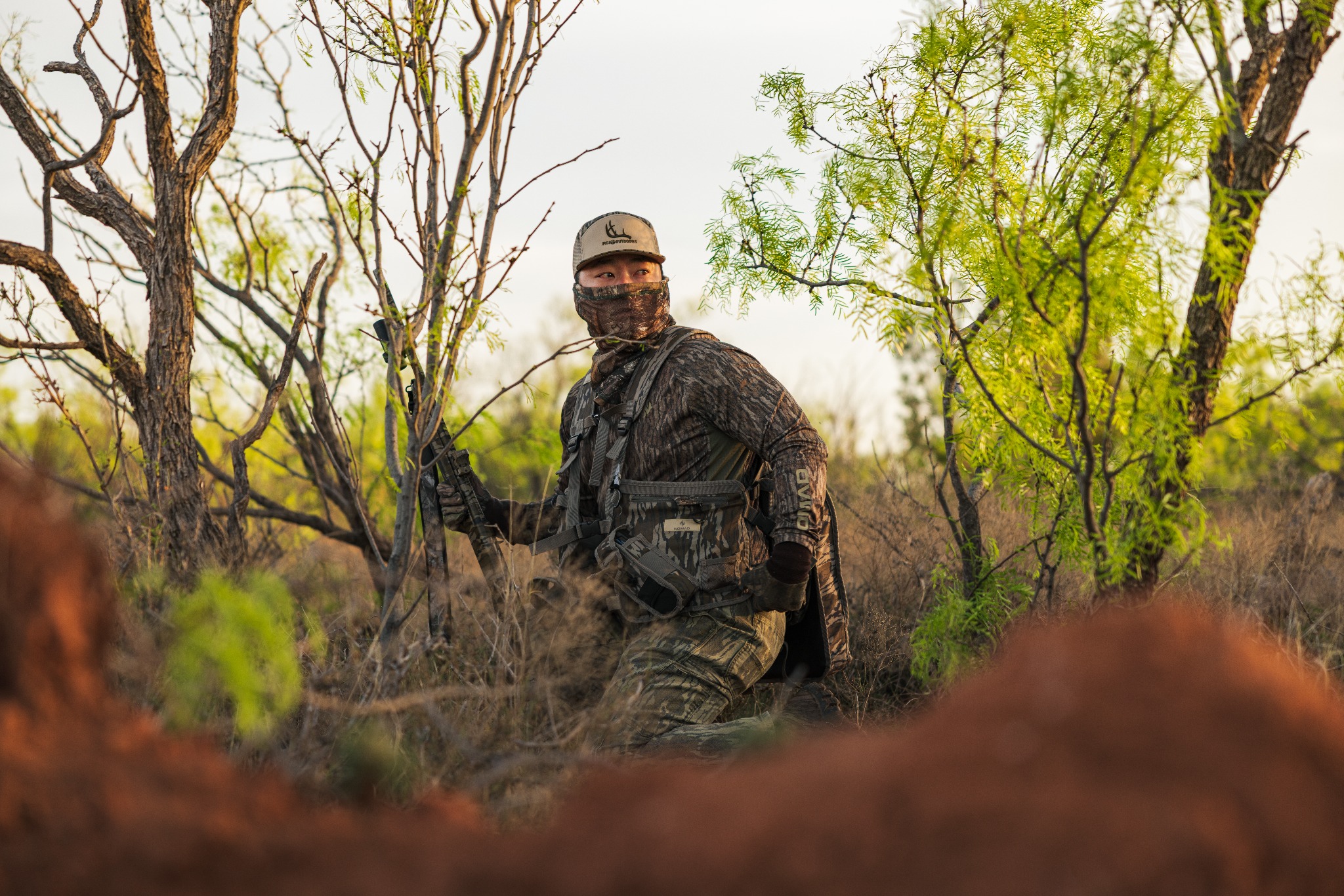 Private land hunting access BirdDog">
Why Does Gear Essentials for Spring Turkey Hunting in Texas Matter?
Essential spring turkey gear includes a 12- or 20-gauge shotgun with turkey choke, quality slate and box calls, full camouflage, and a decoy — private land birds respond more aggressively to calls due to lower pressure.
You don't need a lot of gear to kill a turkey, but a few things make a real difference:
- Shotgun or bow — A 12 or 20 gauge with a tight choke and quality turkey loads is the standard setup. Archery turkey hunting is growing in popularity and is one of the most rewarding challenges in the upland world.
- Full camo — Turkeys have excellent eyesight. Cover everything, including your hands and face.
- Friction and mouth calls — A good slate call and a mouth diaphragm covers most situations. Box calls are great for windy days.
- Lightweight decoys — A hen and a half-strut jake is a deadly combination for pressured Rio Grandes.
- Comfortable seating — You may be sitting against a tree for hours. A good turkey vest with a seat cushion goes a long way.
What Is The Private Land Advantage?
Private land turkey hunting means access to unpressured birds that haven't been called at repeatedly — response rates and gobbling activity are measurably higher on managed private ground than on public land.
Here's the truth about turkey hunting in Texas: public land pressure is real. WMAs and public areas near population centers get hammered, and birds get educated fast.
Private land is a completely different experience. Less pressure means more natural turkey behavior — gobblers gobbling freely, birds using the same strutting zones day after day, and far fewer hunters bumping birds off their patterns.
BirdDog has properties onboarded with access across key turkey country in Texas. We work directly with landowners who want their land used by the right people — hunters who respect the resource, follow the rules, and leave the land better than they found it.
Whether you're looking for a DIY lease opportunity or a fully guided hosted hunt, BirdDog connects you to private land that would otherwise be out of reach.
Why Does Why Spring Turkey Hunting Matters Beyond the Hunt Matter?
Spring turkey season isn't just about punching a tag — it's one of the most effective conservation tools we have. Regulated hunting generates funding through licenses and excise taxes that go directly back into habitat conservation and wildlife management across Texas.
It's also a way for landowners to see real value in maintaining healthy habitat. When turkey hunters are paying to access a property, landowners have a tangible reason to protect riparian areas, manage brush, and keep land from being converted to other uses. That's the conservation-commerce alignment that BirdDog is built on.
Ready to Book Your Spring Turkey Hunt?
If you're tired of fighting public land crowds or knocking on doors hoping for access, BirdDog makes it easier. We've built a platform that connects hunters to private land — vetted properties, real access, and landowners who actually want you there.
Explore available turkey hunting access at birddogit.com and get out there before the season slips by.


Read More...
_4096KB.jpg)
A landowner's guide to identifying revenue potential in idle acreage and stacking multiple income streams — farming leases, hunting access, marketplace bookings, and Section 180 savings — through BirdDog.
_4096KB.jpg)
A plain-English explanation of the Section 180 tax deduction for landowners, who qualifies, realistic savings ranges by acreage, and how BirdDog has helped generate over $30 million in savings.
Get your Texas hunting property ready for fall with this landowner checklist. Cover food plots, stand placement, water, and trail cameras before season opener.